Breast augmentation has evolved into a sophisticated art, blending advanced surgical techniques with a deep understanding of aesthetics. You no longer have to settle for results that broadcast the fact you had a boob job or rival the appearance of Dolly. For those considering breast augmentation, the goal now is often to enhance natural beauty without compromising authenticity. Today’s patients are more likely to ask for soft, proportionate curves that complement their frame, fit comfortably in clothing and swimwear and move naturally with the body.
Here we dive into the key factors that ensure a result that feels true to one’s body. From choosing the right implants and placement to understanding your body type, we’ll explore the essentials for achieving beautifully natural-looking breast augmentation results that boost confidence without broadcasting it to everyone. Whether you live in Columbia, Ellicott City, Baltimore or elsewhere in the Baltimore-Washington Corridor, understanding these factors before your consultation will help you have a more productive conversation with your plastic surgeon and set realistic expectations for your results.
Understanding Your Body and Body Frame
Your natural body frame significantly influences the appearance of breast implants. The size and shape of your body frame play a significant role in determining the most suitable implant size and shape to achieve a natural look. For example, with a petite frame, smaller, moderate-profile implants will deliver a more natural appearance while those with a broader frame can accommodate larger implants and still maintain balance. Your height, weight, shoulder width and hip proportions all factor into how a given implant will look once it settles.
The width of your natural breasts and the space between them further affect the implant diameter choice. Skin elasticity is another factor. Those with more skin elasticity can often support larger implants more naturally, while those with less elasticity might require smaller implants. Furthermore, the overall body shape, such as an athletic or curvier build, helps determine the best implant volume which will enhance the fullness of your breasts without looking bulky and unnatural.
Your surgeon will also evaluate how much breast tissue you already have, since this tissue is what covers and camouflages the implant. Women with very little natural tissue often benefit from implants placed beneath the chest muscle for added coverage, which is discussed in more detail below. Pre-existing asymmetry matters as well. Many women have some difference in size or shape between their breasts, and selecting an implant size and shape tailored to each side can help create better balance. If your breasts have started to sag after pregnancy, breastfeeding or weight loss, implants alone may not be enough, and a breast lift combined with augmentation can elevate the breasts while adding fullness for a more natural result.
Choosing the Correct Implant Size
Your body size and existing breast tissue play a crucial role when it comes to choosing the right implant size for a natural look. The wrong breast implant choice can result in new breasts that scream boob job. As mentioned above, smaller body frames will ideally want to go with smaller implants, while curvier women can support larger implants while still providing natural results. Trying different sizes with the rice test or something similar can help you see how a specific implant size may look.
For the rice test, fill a plastic bag or nylon stocking with uncooked rice, place it inside a bra and wear it under your clothes for a few days. It is not an exact substitute for an implant, but it can help you decide whether you are leaning toward a more subtle or a fuller look before you sit down with your surgeon.
It is also helpful to know that breast implants are measured in cubic centimeters (cc), not cup sizes. Cup sizes vary widely from one lingerie brand to the next, so cc measurements give your surgeon a much more precise way to plan your results. Bringing photos of results you like can help communicate your goals, but keep in mind that the same implant can look very different on two women with different heights, weights and proportions. The goal is to choose the size that looks best on your body, not someone else’s.
Size is only part of the equation. Implants also come in different profiles, which describe how far the implant projects forward from the chest in relation to its width. A lower-profile implant is wider and flatter, while a higher-profile implant offers more projection. Your plastic surgeon will recommend the size and profile that best fit the width of your chest and the shape you want to achieve.
The Type of Implant Can Impact Your Results
When it comes to the different types of implants, there are options for both material and shape. Implants are available in silicone and saline and both have their pros and cons. For example, saline implants require a smaller incision, so scarring is minimal and, in the event of a rupture, the body can absorb the saline. Saline implants are inserted empty and filled once they are in place, and they are FDA-approved for breast augmentation in women 18 and older.
However, saline implants are often more prone to rippling which creates folds in the skin of the breast. In contrast, silicone implants can cause more problems in the event of a rupture, but they are less prone to rippling, feel more natural to the touch, and deliver a more natural appearance. Because a silicone implant does not deflate when its shell breaks, a leak may go unnoticed, which is why ultrasound or MRI screening can be used to assess the condition of silicone implants over time. Today’s cohesive silicone gel implants are designed to hold their shape even if the shell is compromised. Silicone implants are FDA-approved for breast augmentation in women 22 and older.
Shape and surface are the other half of the decision. Round implants tend to make the breasts appear fuller, and because they are the same shape all over, there is less concern about them rotating out of place. Form-stable implants, often called gummy bear implants, contain a thicker gel and can be shaped to taper toward the top, but they require a slightly longer incision and can create an unusual appearance if they rotate. Smooth implants are the softest feeling and move with the breast pocket for more natural movement, while textured implants are designed to adhere to surrounding tissue. Textured surfaces are most frequently associated with breast implant-associated anaplastic large cell lymphoma (BIA-ALCL), so be sure to discuss the benefits and risks of each surface with your surgeon. You can learn more about your options on our breast implants page.
Does Implant Placement Really Matter?
Breast implant placement is either subglandular (behind the breast tissue) or submuscular (behind the pectoralis muscles). While both areas of placement can produce natural-looking breasts, submuscular placement has become the more common approach. Data from board-certified plastic surgeons published in Plastic and Reconstructive Surgery showed submuscular placement increasing from 22 percent to 56 percent of breast augmentation cases between 2005 and 2020, while subglandular placement fell from 19 percent to 7 percent. Not only can this reduce the chances for scar tissue contracture, but submuscular placement allows for more tissue coverage of the implant which often yields results that make the breasts look natural and keep the implants hidden.
Our surgeons typically prefer submuscular placement because it reduces the risk of cosmetic complications such as rippling and capsular contracture, and it is usually the better option for women with less natural breast tissue. Submuscular placement is also associated with easier mammography imaging. A variation known as the dual-plane technique places the upper portion of the implant beneath the chest muscle to enhance the upper breast with additional soft tissue coverage, and it remains one of the most widely used approaches today.
Incision placement also affects how natural your results look up close. Patients at Columbia Aesthetic can choose from three incision options: along the fold beneath the breast (inframammary), around the edge of the areola (periareolar) or through the armpit (transaxillary). Each is designed to keep scars discreet, and the best choice depends on your implant type, placement and personal preference.
Finally, remember that natural-looking results take time. Swelling can make implants look high and firm at first, and it usually takes around three months for implants to “drop and fluff” into a lower, softer and more natural position. Full results are typically visible at about six months.
If you are considering natural-looking breast augmentation, this may seem like a lot of things to consider, but you don’t have to do it alone. Here at Columbia Aesthetic, Dr. Chang or Dr. Wang will work with you and the team to determine which implants will work best for you and achieve the results you are looking for. You can see real patient results in our breast augmentation before and after gallery, and you can ask about our sedation option, also known as twilight anesthesia, which lets you breathe on your own without a breathing tube.
To learn more, contact us online or call 410-740-9330 today to schedule your consultation at our Columbia, Maryland office and see how the right implant can help enhance your bustline with natural results.
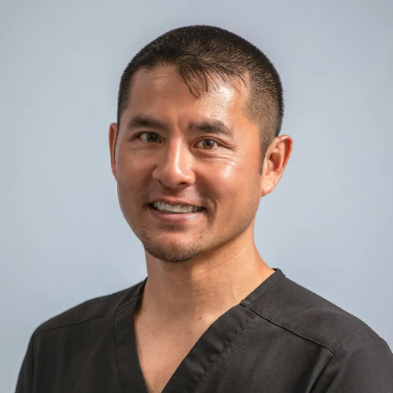
Author: Dr. Eric Chang
Few plastic surgeons offer Dr. Eric Chang’s rare blend of impressive credentials and genuine compassion. After becoming a board-certified plastic surgeon, he returned to his home state and established Columbia Aesthetic Plastic Surgery, one of the premier cosmetic and reconstructive plastic surgery practices between Washington, D.C. and Baltimore.